A Model for Managed Use: The Public-Private Partnership Behind Hanging Lake
How a visionary coalition protected one of Colorado’s most iconic and fragile natural wonders
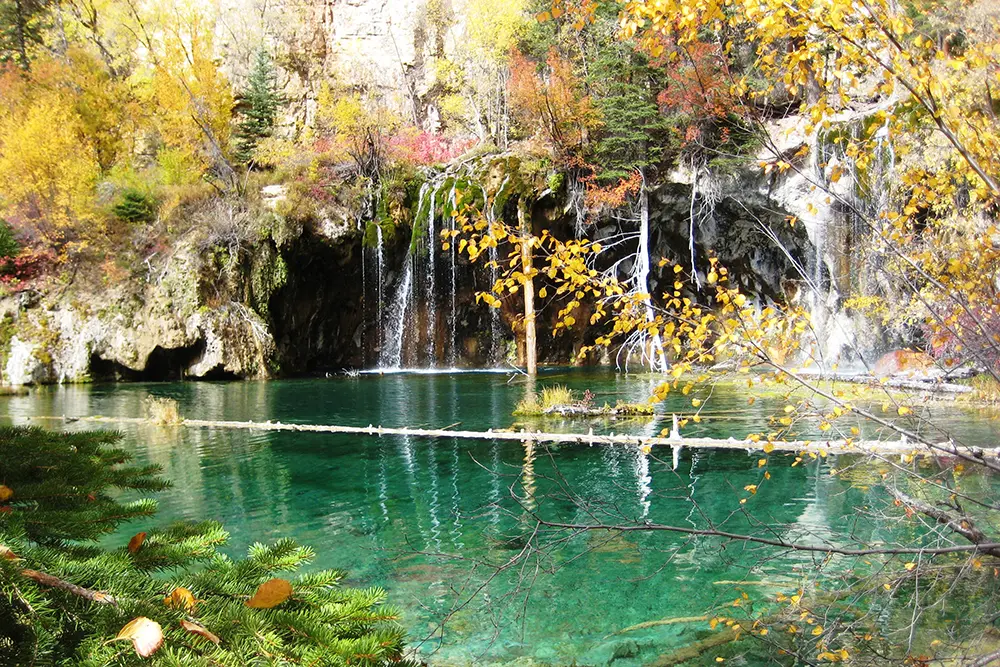
Hanging Lake is more than a destination—it is a symbol of Glenwood Springs’ identity. As one of Colorado’s most photographed natural landmarks, it draws visitors from around the world while anchoring the town’s reputation for adventure, wellness, and natural beauty. Yet overwhelming visitation once threatened the site with severe trail erosion, overcrowded parking, environmental degradation, and a diminished visitor experience. Without intervention, its fragile ecosystem risked irreversible harm. To protect the resource, ensure safety, and balance access with conservation, a comprehensive management plan was created—laying the foundation for a pioneering public-private partnership (PPP) that continues to serve as a model for sustainable public land stewardship.
Partnership Formation & Evolution
The initiative began in 2013, when the U.S. Forest Service (USFS) convened a coalition of partners—including Colorado Department of Transportation (CDOT), the National Park Service (NPS), Garfield County, the City of Glenwood Springs, Glenwood Springs Tourism Promotion Board and Chamber of Commerce, Xcel Energy and others—to address mounting pressures.
To address growing challenges at Hanging Lake, the USFS partnered with the U.S. DOT’s Volpe Center to explore long-term transportation solutions. Their Transportation and Operations Study evaluated four strategies aimed at reducing parking congestion, trail crowding, visitor dissatisfaction, and environmental impacts. This effort was part of a broader initiative to create a sustainable management plan for the site.
Building on the Volpe Center’s findings, the U.S. Forest Service—under the leadership of Supervisor Scott Fitzwilliams—took an innovative next step in 2018. Committed to collaborative problem-solving, Fitzwilliams launched a groundbreaking procurement process that asked private-sector partners a single, open-ended question: “If you were to manage Hanging Lake, how would you do it?” By shifting away from rigid requirements, this approach invited creativity and set the stage for a visionary management model centered on sustainability, visitor experience, and long-term stewardship.
Twelve companies submitted proposals to manage visitor use at Hanging Lake. H2O Ventures, known for its community-minded approach and thoughtful solutions, was awarded the contract. The initial system relied on timed-entry shuttle reservations, later evolving into a parking reservation model that preserved the site’s natural beauty while improving the visitor experience with more space, quieter moments, and better photo opportunities.
Recognizing the opportunity to broaden collaboration, the U.S. Forest Service invited the City of Glenwood Springs to join as a formal partner alongside H2O Ventures. This innovative public-public-private partnership reinvests revenue directly into the site, supports local businesses and overnight stays, and strengthens Glenwood Springs’ leadership in sustainable, nature-based tourism. The city’s involvement enhanced financial flexibility, improved visitor management, and aligned operations with community priorities—creating a forward-thinking model of collaborative destination management for other iconic public lands.
The success of the Hanging Lake partnership inspired a similar arrangement at Maroon Bells in 2020, evidence of the growing trust in the managed-use model. More recently, the USFS has also partnered with the National Forest Foundation to establish the Roaring Fork Stewardship Fund, adding another layer of support and innovation to the stewardship ecosystem.
Operational Model & Adaptations
H2O Ventures’ operational model has evolved since its inception. Originally designed as a shuttle-based transportation system, the model pivoted during the COVID-19 pandemic (when visitors were less comfortable using shared transportation) to a parking-based reservation approach—demonstrating both agility and foresight.
Today, Hanging Lake access continues to operate on a parking-based system, which accommodates visitor demand while minimizing environmental impact. Reservations are integrated with the Visit Glenwood Springs website, offering a user-friendly booking experience with backend flexibility allowing for dynamic management of capacity and scheduling. Improved visitor communication at the time of booking and before arrival reduces visitor impacts and emergencies. Despite inflation and rising operational costs, visitor-entry pricing has remained steady at $12 thanks to continual system refinements and cost-saving technologies.
Over time, the private operating partner at Hanging Lake has taken on an increasingly integral role in the site’s day-to-day success. Beyond managing transportation and reservations, the operator now plays a key part in trail and facility maintenance, visitor communications, and on-the-ground guest services. This includes coordinating special events, supporting interpretive programming, managing real-time messaging about trail conditions and safety, and working closely with the Forest Service to uphold environmental standards. This expanded scope has allowed for more responsive, efficient, and guest-focused operations, relieving pressure on agency resources while enhancing the overall visitor experience.
Keys to Success
The partnership’s achievements are rooted in:
- Operational Flexibility: H2O Ventures’ ability to adapt quickly to changing conditions—including COVID-19 and environmental disruptions—has ensured uninterrupted access while protecting the resource.
- Data-Driven Decision-Making: Real-time data informs decisions on parking turnover, trail capacity, and operations, replacing instinct-based management with evidence-based strategies.
- Local Knowledge: Deep familiarity with the region’s geography and tourism dynamics enhances responsiveness, relevance, and service quality.
- Technology Adoption: Custom-built tools and strategic tech integrations streamline operations, improve user experience, and boost efficiency.
- Access to Funding: As a private partner, H2O Ventures can pursue grant opportunities that are unavailable to the U.S. Forest Service, expanding financial support for site management.
- Shared Values: Two guiding principles—protecting the resource and preserving the visitor experience—anchor every operational and strategic decision.
- Economic Impact: The management model creates both year-round and seasonal employment in guiding, transportation, customer service, and site operations—fueling the local economy while building community stewardship.
- Public Value: The model delivers tangible benefits to the public, proving that private enterprise can enhance, rather than exploit, the values of public lands.
- Stakeholder Communication: Ongoing collaboration with local and federal partners fosters trust, transparency, and alignment across diverse interests.
- Flexible Reservations: A customized reservation system accommodates both vehicle and bicycle access, balancing demand with capacity while improving the visitor experience.
Challenges & Concerns
Despite its success, the partnership has also navigated several hurdles:
- Public Perception: Early concerns about privatizing public lands required intentional messaging and transparency. With years of demonstrated success, those concerns have largely dissipated.
- Forest Service Turnover: Frequent changes in personnel have led to lapses in institutional knowledge. Better transition documentation and onboarding practices are recommended to maintain continuity.
- Systemic Risk: As more destinations consider managed-use models, poorly executed examples could undermine public trust and the integrity of the approach.
- Transparency & Accountability: Maintaining open reporting on revenue use and operational margins is critical to sustaining stakeholder confidence.
Conclusion
The Hanging Lake partnership is more than a management success—it is a blueprint for how innovative, community-aligned collaborations can redefine stewardship on public lands. Grounded in adaptability, transparency, and a shared commitment to protect both nature and visitor experience, it sets a new standard for what is possible when government and private partners work together for the greater good.